Universitas Gadjah Mada UNIVERSITAS GADJAH MADA
FACULTY OF AGRICULTURE
DEPARTMENT OF FISHERIES
BACHELOR IN FISH PRODUCT TECHNOLOGY
  • Home
  • Post by
  • page. 4
Post by :

primaputra

Growth Rate and Histamine Production of Klebsiella sp. CK02 Isolated from Skipjack Tuna Compared with Morganella morganii ATCC 25830 at Various Incubation Temperatures

NewsPublication Wednesday, 22 April 2020

Growth Rate and Histamine Production of Klebsiella sp. CK02 Isolated from Skipjack Tuna Compared with Morganella morganii ATCC 25830 at Various Incubation Temperatures

Aldino Dityanawarman, Indun Dewi Puspita, Susana Endah Ratnawati, Nurfitri Ekantari, and Mark Tamplin

Abstract

One of an important quality parameter in tuna is the level of histamine content. The contamination of histamine in tuna is mainly due to the activity of histidine decarboxylase produced by the bacteria. A rapid growth of histamine producing bacteria is correlated with the practice of temperature abuse during handling. This study aimed to develop predictive growth modeling of two histamine-producing bacteria in the function of temperature. The growth and histamine production of Klebsiella sp. CK02 and Morganella morganii ATCC 25830 at various temperatures were measured in tryptic soy broth histidine (TSBH) and tuna fish infusion broth (TFIB) growth media. Broths were incubated at 4°C and 15°C for 7 days, and at 30°C and 40°C for 24 hours. The Baranyi and Roberts model was used with DMFit to determine primary growth kinectics, and the Ratkowsky square root model to describe bacterial growth rate as a function of temperature. Histamine production was enumerated by the apparent yield factor (pYhis/ CFU) value. Growth rate increased with temperature, with a maximum rate at 40°C for Klebsiella sp. CK02 (0.740 log CFU/h) and M. morganii (0.578 log CFU/h). The Tmin for Klebsiella sp. CK02 in TFIB was -8.9°C, indicating better survival in low storage temperature, compare to M. morganii ATCC 25830. In addition, Klebsiella sp. CK02 produced a lower pYhis/CFU at 15 and 30°C compared to M. morganii ATCC 25830.
Keywords: growth rate, temperature, histamine, Klebsiella sp. CK02, M. morganii ATCC 25830 read more
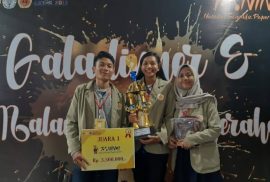
BFPT Student Won Second Place in Student National Scientific Writing Competition held By Mercu Buana University

Student Achievements Monday, 13 April 2020

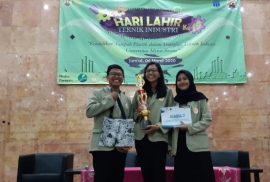
The National Industrial Engineering Student Scientific Writing Competition was held by the Industrial Engineering Student Association, Mercu Buana University, Jakarta on March 15, 2020, with the theme “Control Plastic Waste in the Synergy of Industrial Engineering at Mercu Buana University”. The competition consists of 2 stages starting from full paper selection and presentation. The full paper stage was attended by 20 participating teams from various universities in Indonesia.

The team from UGM consisting of Asthony Purwanda Febriawan (Aquaculture 2017), Ragil Puspita Megaranu (Fish Product Technology 2017), and Rafelinta Daradwinta (Biology 2017) brought 2nd winner in that competition. Under the guidance of UGM Fisheries Lecturer, Indun Dewi Puspita, SP, M.Sc., Ph.D, the team presented the potential innovation for “ON-CHANGE” bag products as an alternative to plastic bag substitution by selecting basic materials derived from nature and fishery product waste. The basic ingredients chosen include water hyacinth and fish bone gelatin as a form of optimizing the use of abundant natural materials and waste. read more

Corona Virus Alert

Research Activity Adjustment due to Covid-19

Information Friday, 20 March 2020

For all respective student, due to the Covid-19 pandemic, FPT-SP will adjust all research activity by referring on the Rector Decree (download). Please contact the respective Head of Laboratory for further information and regulations.

Emi Windrayani (BFPT 2017) join AIMS student exchange to UMT Malaysia

Student activity Friday, 14 February 2020

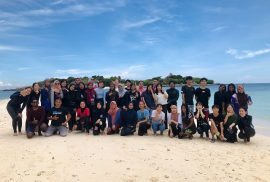
I’m Emi Windrayani, last year student of Bachelor in Fish Product Technology (BFPT), Gadjah Mada University. Being exchange student is one of my dreams and thank God it comes true. I remember that time when Dr. Sita offered AIMS program to all student at that class, and my friends supported me to join the program. After that, I tried to register AIMS and thank God on September 2019 until January 2020 I had opportunity to go to Malaysia. Before that, I will tell you about AIMS, AIMS (ASEAN International Mobility for Students) is a form of cooperation in the field of education (student exchange) by the Direktorat Pendidikan Tinggi Indonesia (DIKTI). This program provides opportunities for students to experience a learning atmosphere in various cultures from various countries. I went to University Malaysia Terengganu with Dona, Nisa and Evy. read more

Comparison of Formulation Methods to Produce Nano-Chitosan as Inhibitor Agent for Bacterial Growth

Publication Tuesday, 11 February 2020

Prihati Sih Nugraheni, Alexander H. Soeriyadi, Ustadi Ustadi, Wahyudi Budi Sediawan, Wiratni Budhijanto

Abstract

Chitosan is known as an antibacterial agent. The effective surface area ratio of chitosan can be increased by modification into nanoparticles. Nano-chitosan can be prepared with several simple methods, i.e. precipitation, ionic gelation, or the polyelectrolyte complex method. This study compared these three methods in terms of the targeted product characteristics, i.e. stability of the average nanoparticle size as well as the colloidal dispersion, and the antibacterial characteristics. All three methods resulted in nanoparticle formation, but in the precipitation method significant zeta potential reduction was observed due to the presence of negative ions from the alkali that neutralized the chitosan amine group. The ionic gelation method yielded higher zeta potential and higher inhibition of bacterial growth than those yielded by the polyelectrolyte complex method. Ionic gelation and the polyelectrolyte complex method resulted in much better colloidal dispersion stability than the precipitation method, where a significant particle size increase was observed after one week of storage. This result indicates that both ionic gelation and the polyelectrolyte complex method can be used for forming nano-chitosan for the purpose of food preservation. However, for fishery products it is advisable to use the polyelectrolyte complex method because the TPP usually used in ionic gelation is not allowed to be applied to fish. read more

Increasing Chitinase Activity of Serratia marcescens PT-6 through Optimization of Medium Composition

Publication Tuesday, 11 February 2020

Akhmad Awaludin Agustiar, Imas Faturrohmah, Bekti Wulan Sari, Nurul Binti Isnaini, Indun Dewi Puspita, Triyanto Triyanto, Amir Husni, and Ustadi Ustadi

Abstract

Chitin hydrolysate is one of the value added product derived from shrimp shell waste. Production of chitin hydrolysate using biological process offers an environmental friendly method compared to chemical process. Serratia marcescens PT-6, a gram negative chitinolytic bacterium isolated from shrimp pond sediment, shows good activity in hydrolyzing chitin. This study aimed to improve the chitinase activity of S. marcescens PT-6 culture by optimizing the component of chitin-containing medium (additional nitrogen source, additional carbon source, and colloidal chitin). The optimization of chitinase by S. marcescens PT-6 culture was done using one variable at a time method. The sequence of the research were to optimize 1) the type of additional carbon source (glucose, lactose, sucrose, and starch), 2) the type of additional nitrogen source (yeast extract, peptone, ammonium sulphate, and ammonium chloride), 3) the concentration of colloidal chitin (0.5; 1; 1.5; 2; and 2.5%), and 4) the concentration of the additional carbon and nitrogen source. The culture of S. marcescens PT-6 was incubated in colloidal chitin medium at 30 oC and chitinase activity from culture supernatant was analyzed. The results showed that starch gave the highest chitinase activity compare to other carbon source, meanwhile yeast extract was chosen as the best nitrogen source among others. The combination of 1.5% colloidal chitin with 0.5% starch and 0.1% yeast extract in medium increased the chitinase activity of S. marcescens PT-6 to 0.021 U/ml. These results indicated that an appropriate medium composition could increase the chitinase activity produced by S. marcescens PT-6 culture.

Keywords: chitinase, colloidal chitin, S. marcescens PT-6, starch, yeast extract

full text

BFPT Student Won First Place in national Scientific Writing Competition TANIN#1 in Mataram University, West Nusa Tenggara

Student Achievements Tuesday, 10 December 2019

An UGM team consist of three student, Ragil Puspita Megaranu (Fish Product Technology 2017), Muhammad Zainurrohim (Animal Husbandry 2017) and Rafelinta Daradwinta (Biology 2017) won 1st place in TANIN #1. The TANIN # 1 National Student Scientific Writing Competition was held by the Student Association of the Animal Husbandry Study Program, Mataram University, West Nusa Tenggara on November 11-14 2019 with the theme “Millennial Innovation Movement in Science and Technology Development and Local Potential to Face the Indonesian Generation. Gold of 2045 “. The competition consists of 2 stages starting from full paper selection and presentation. The presentation stage was attended by 15 finalists from Gadjah Mada University, Airlangga University, Yogyakarta State University, Surabaya State University, Lambung Mangkurat University, Mataram University, Arsyad Al Banjari Islamic University, Ahmad Dahlan University, Telkom University, Ganesha Education University, and University Sriwijaya. read more

BFPT Lectures participated on 9th International Fisheries Symposium (IFS)

International Activities Monday, 9 December 2019

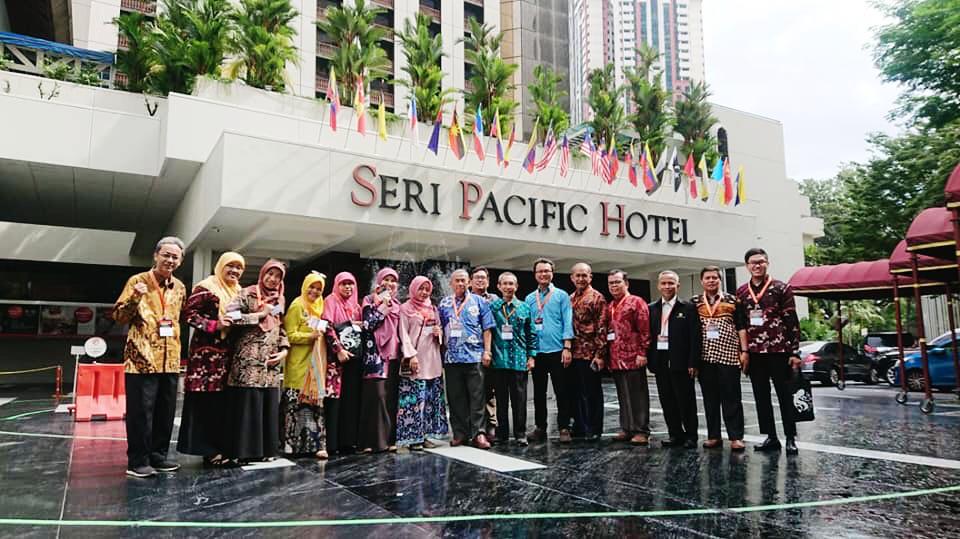
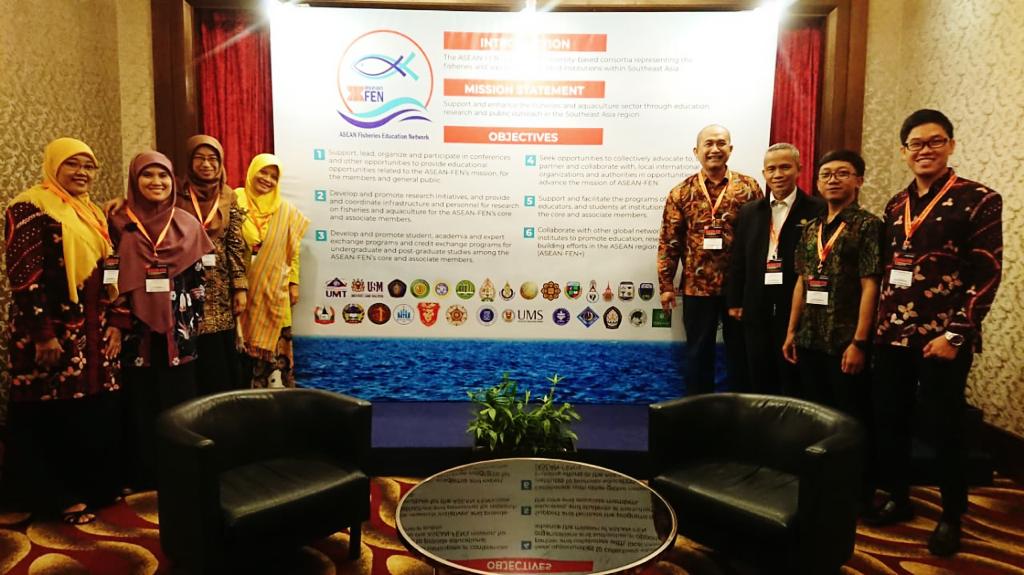
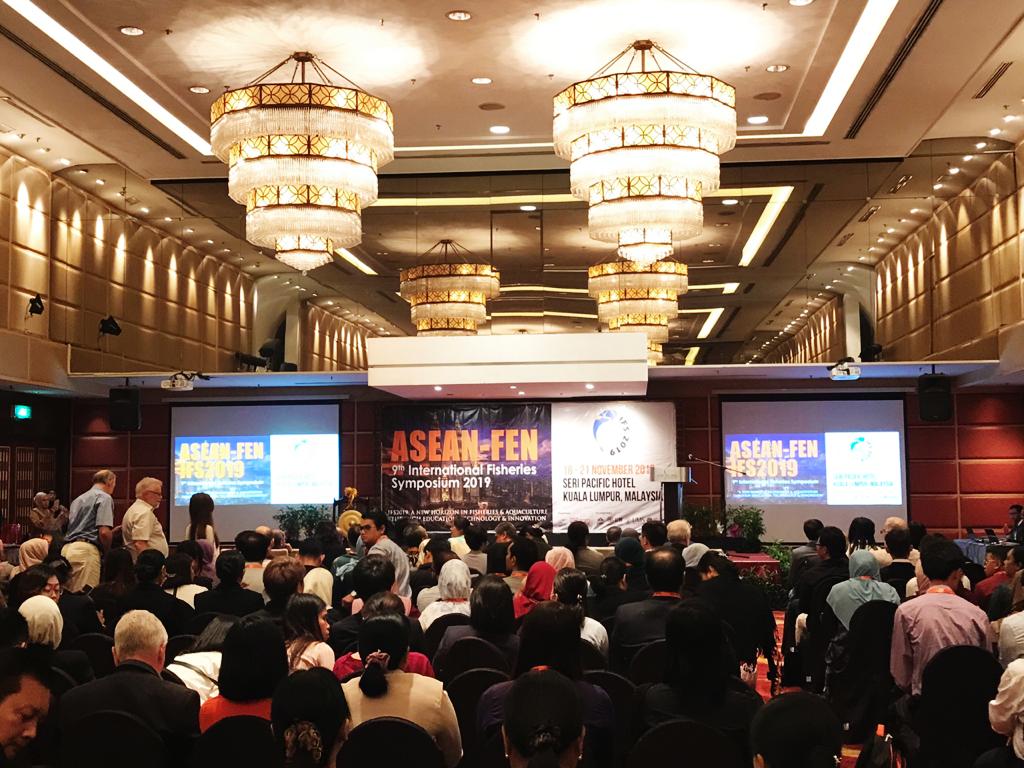
8 Lectures of Bachelor in Fish Product Technology Study Programs (BFPT) participated on the 9th International Fisheries Symposiums organized by University Putra Malaysia at Seri Pacific Hotel, Kuala Lumpur Malaysia. Annual International Fisheries Symposium is an annual academic symposium which provides the attendees with the opportunity to gain insights into topics such as Nutrition and Feed, Aquatic Animal Health, Information technology and Engineering, Genetics and Biotechnology, Fisheries Biology and Resource Management, Postharvest, Fish Products and Food Safety, Brood stock culture, and hatchery management, Algae and Aquatic Plants, etc.  As the member of ASEAN FEN (ASEAN Fisheries Educational Network), Department of Fisheries actively involved on IFS.  The symposium was held for 2 days on November 18 – 21, 2019. All participants were present their latest research achievement. read more
Waste Management for Shredded Fish Production at UPI Sari Mina Dusun Sempu, Pakembinangun, Pakem, Yogyakarta as Zero Waste-Based Processing of Fishery Products

Community Development Monday, 2 December 2019

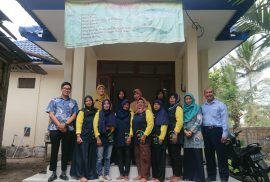
UPI Sari Mina is an intermediate level fish processing unit located in Sempu, Pakembinangun village, Pakem district, Sleman Yogyakarta. UPI Sari Mina is a joint venture group of women residents in Sempu who has been engaged in processing shredded fish since 2009. The main product of UPI Sari Mina is shredded fish made from catfish, tuna and salmon mixed with lemadang. Every month, UPI Sari Mina processes about 4 quintals of catfish, 8 quintals of tuna, and 60 kg of salmon to be used as a variety of floss. The problem faced by the processing group was production waste in the form of untapped skin, bones and heads. For this reason, the Service Team for the Fisheries Product Technology Study Program carried out a service program in the form of technology transfer and training in bone and fish skin waste processing in October-November 2019. read more

Fisheries Department Anniversary 2019

News Wednesday, 18 September 2019

Department of Fisheries held a 56th anniversary on September 1st 2019 by organized an event for Department member including lecturer, staff and students. Starts with walked around the campus, the event continued with door prized draw and lunch with all fish menu.

123456

Link

 aspirations and feedback
aspirations and feedback


Recent Posts

  • FPT-SP lectures got best presenter award
  • Impact of Enzymatic Hydrolysis on Antioxidant Activity of Snakehead Fish (Channa striata) Head Protein Hydrolysate
  • Production, purification and characterization of chitinase from Micromonospora sp. AR17
  • In Vitro α-Amylase and α-Glucosidase Inhibitory Activity of Green Seaweed Halimeda tuna Extract from the Coast of Lhok Bubon, Aceh
  • Optimization Concentration of Irgacure® 2959 as Photo-initiator on Chitosan-Kappa-Carrageenan Based Hydrogel for Tissue Sealant

Archives

Universitas Gadjah Mada

Jl. Flora Gedung A4, Bulaksumur,

Caturtunggal, Kec. Depok, Kabupaten Sleman,

Daerah Istimewa Yogyakarta 55281

(0274) 551218
fish@ugm.ac.id

Download

Module Handbook

Manual Procedure Examination

Manual Procedure for Field Work

Manual Procedure for Undergraduate Thesis

Student Community Cervices Guide Book

Leaflet

Indonesian Society for Fisheries Processing Technology

Go to Website


Journal of Fisheries Sciences

Go to website


© Universitas Gadjah Mada

KEBIJAKAN PRIVASI/PRIVACY POLICY